EXHIBITION
Part of the landscape
September 20–November 2, 2026
Opening
Saturday, September 19th, at 4 p.m.
curator Café Meeting
Sunday, October 18, at 11 a.m.
artists
Andrew Jackson, Emmanuelle Jacques, Michèle Magema, Anna Jane McIntyre, Jean-Marc Superville Sovak, Aida Vosoughi, Stanley Wany.
curator
Emmanuelle Jacques
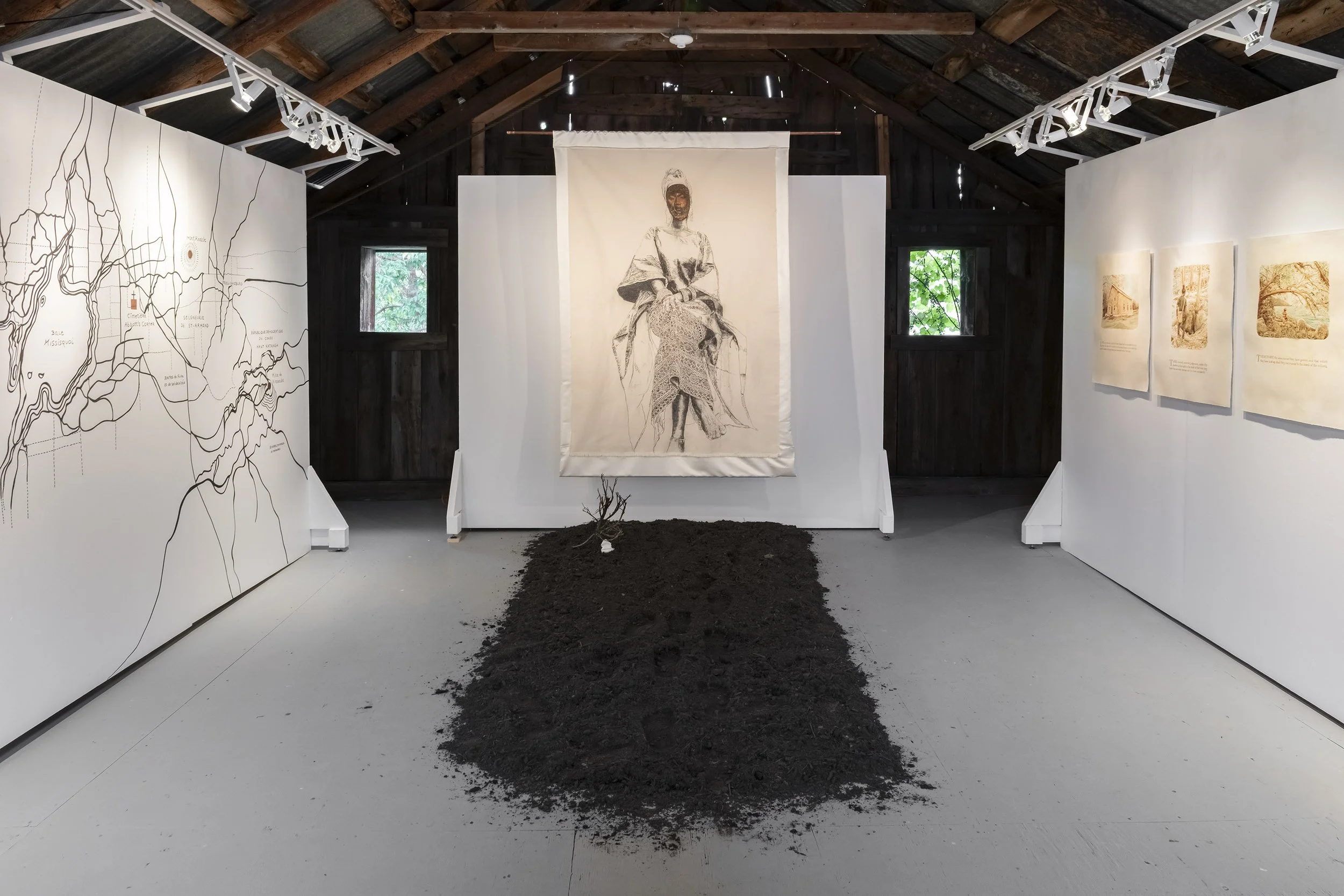
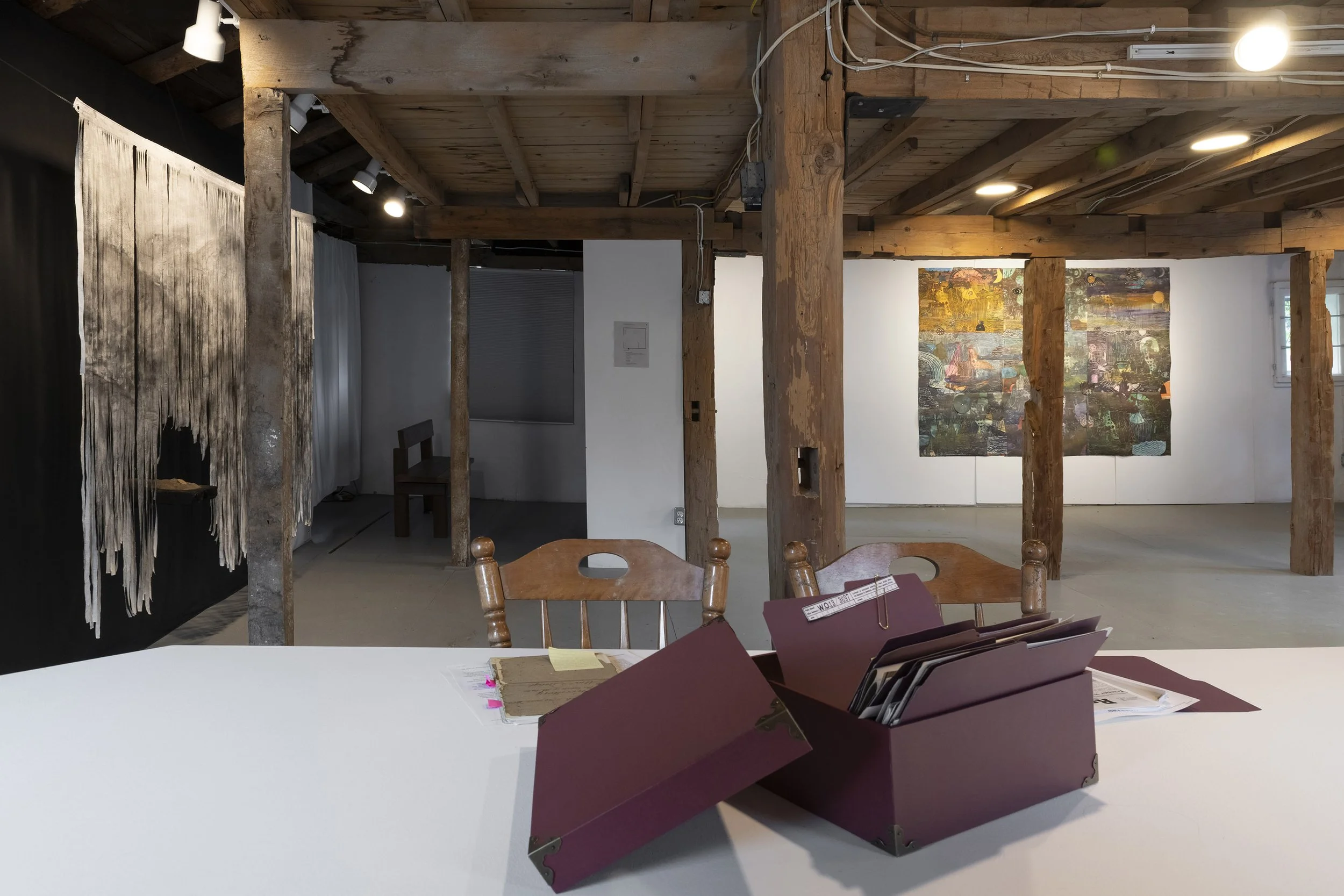
Adélard presents Part of the Landscape , a group exhibition spread across both floors of the barn, bringing together new works by seven artists around the legacy of slavery and the historical presence of Black communities in Brome-Missisquoi.
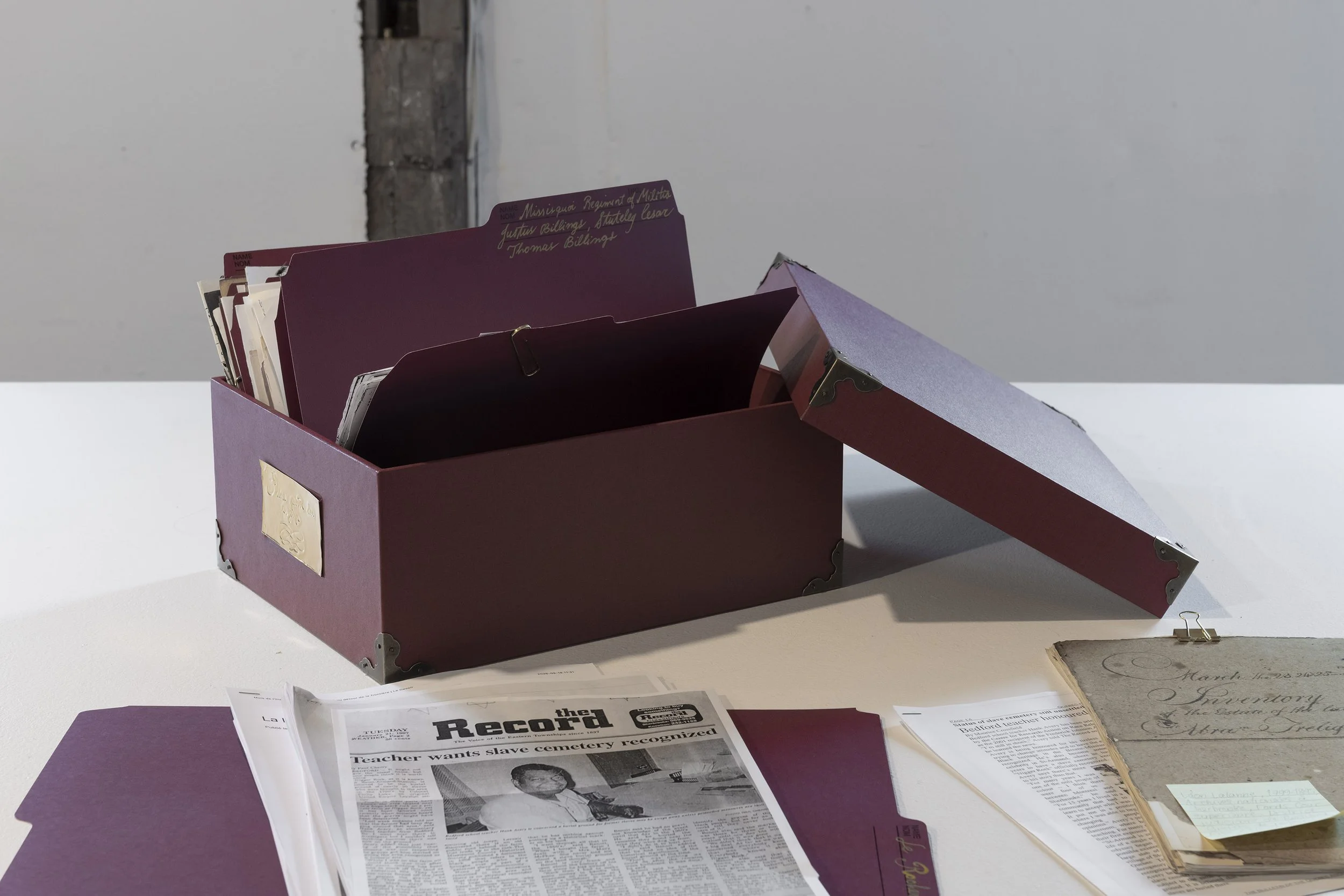
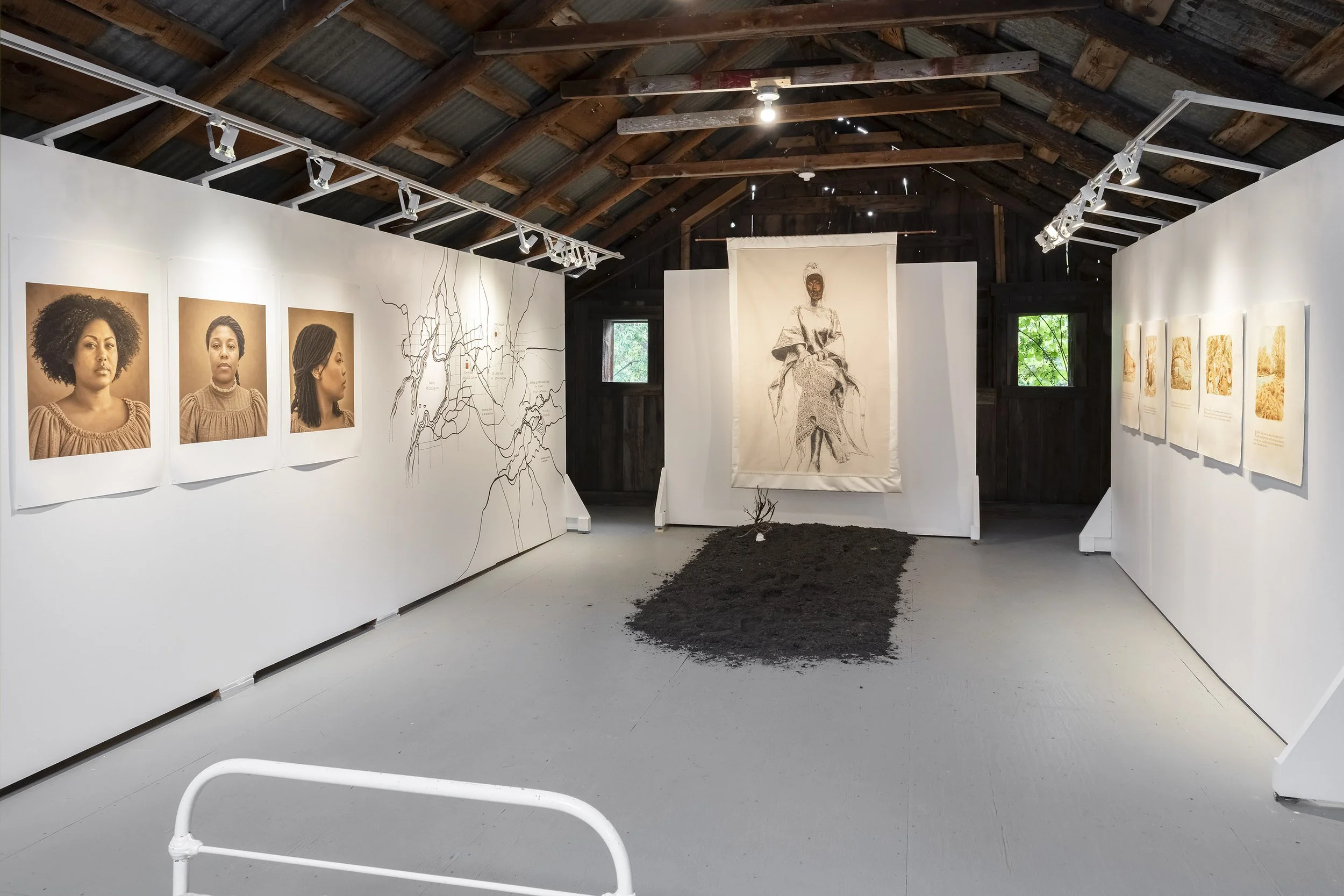
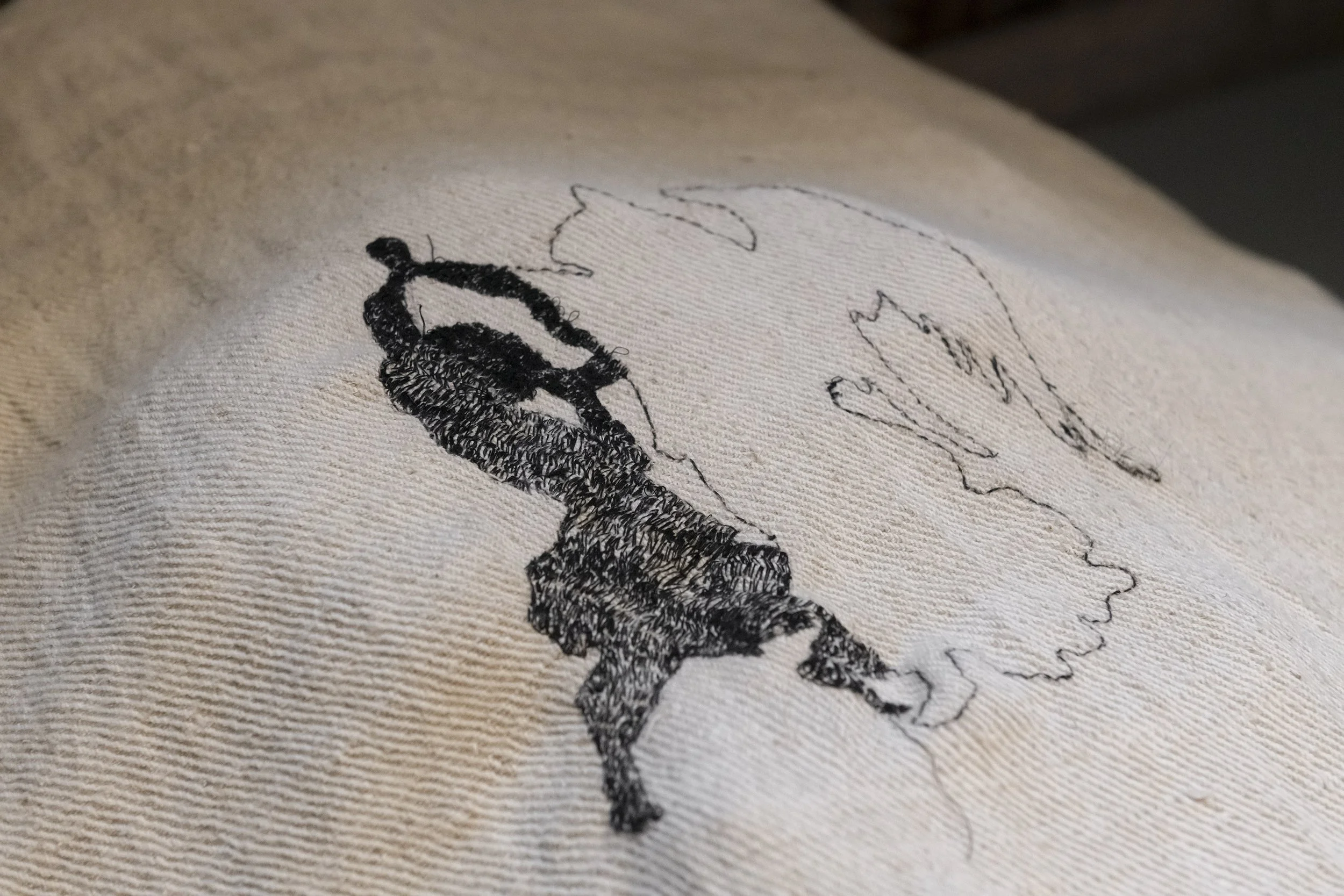
Based on research conducted during residencies at Adélard, the exhibition draws on archival documents, testimonies, and observations of the territory, which become, for the artists, the material for a critical and imaginative interpretation of the past. Through drawing, painting, photography, collage, engraving, embroidery, installation, video, sculpture, and writing, the works question the silences of history, narratives of emancipation and servitude, migrations, and the traces of 19th-century colonization.
-
A landscape can appear silent and offer a natural continuity, a form of geographical self-evidence perceived as a stable memory. Yet, no landscape is neutral. It reflects political constructions where geology, economics, migration, labor, violence, and oblivion intertwine. It is a place where some narratives become visible and others disappear beneath the surface of maps, monuments, and archives. Every landscape, through its topography, stone walls, paths, forests, waterways, or farmland, preserves traces of invisible and deliberately marginalized histories. To inhabit a landscape, to traverse it, or to observe it, then, means entering into a relationship with these layers of memory, taking our place within them, and recognizing that we ourselves participate in their transmission. It is from this relationship between territory, memory, and presence that the project "Part of the Landscape" is built, proposing to shift our perspective.
Curated by visual artist Emmanuelle Jacques, based on research begun with Anna Jane McIntyre on the legacy of slavery and the presence of Black communities in the Brome-Missisquoi region during the 19th century, the exhibition brings together seven artists whose practices explore archives, historical narratives, diasporic memories, migrations, and the legacies of colonization. Andrew Jackson, Emmanuelle Jacques, Michèle Magema, Anna Jane McIntyre, Jean-Marc Superville Sovak, Aïda Vosoughi, and Stanley Wany offer a reflection on the conditions of transmission of this history.
The exhibition does not aim to reconstruct the past. It considers imagination not as an invention to replace facts (Hartman, 2016), but as a method to inhabit the voids produced by History in order to give a sensitive depth to the existences that dominant narratives have silenced.
Each artist proposes to transform the very way in which a territory becomes legible. Indeed, the collection of scattered traces in official documents (censuses, notarial deeds, land registers, records, even in oral tradition and in situ in cemeteries) testifies as much to what they reveal as to what they render invisible. The silences they contain then become spaces for creation, with the archives serving as the starting point, without, however, representing the ultimate goal.
Bringing together drawing, painting, photography, collage, engraving, embroidery, installation, video, sculpture, and writing, the works presented shift our way of inhabiting the territory. They reveal landscapes as spaces where human memories, the geographies of slavery and colonialism, political imaginaries, and vernacular knowledge intertwine. The artists do not simply document a place; they interrogate the mechanisms that determine which stories become visible and which remain on the periphery of collective memory. The tears in the fabric of history are sometimes so great as to be irreparable.
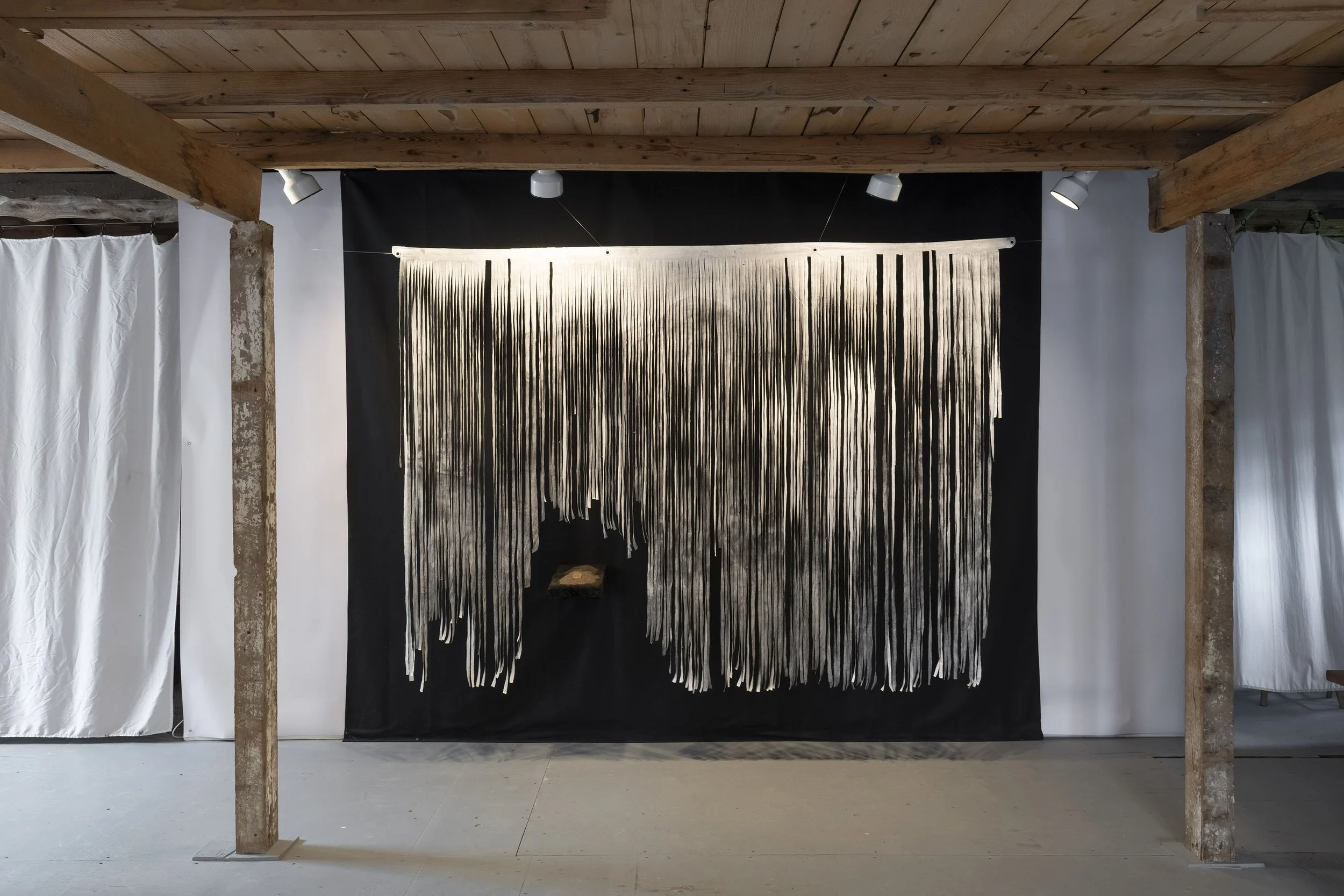
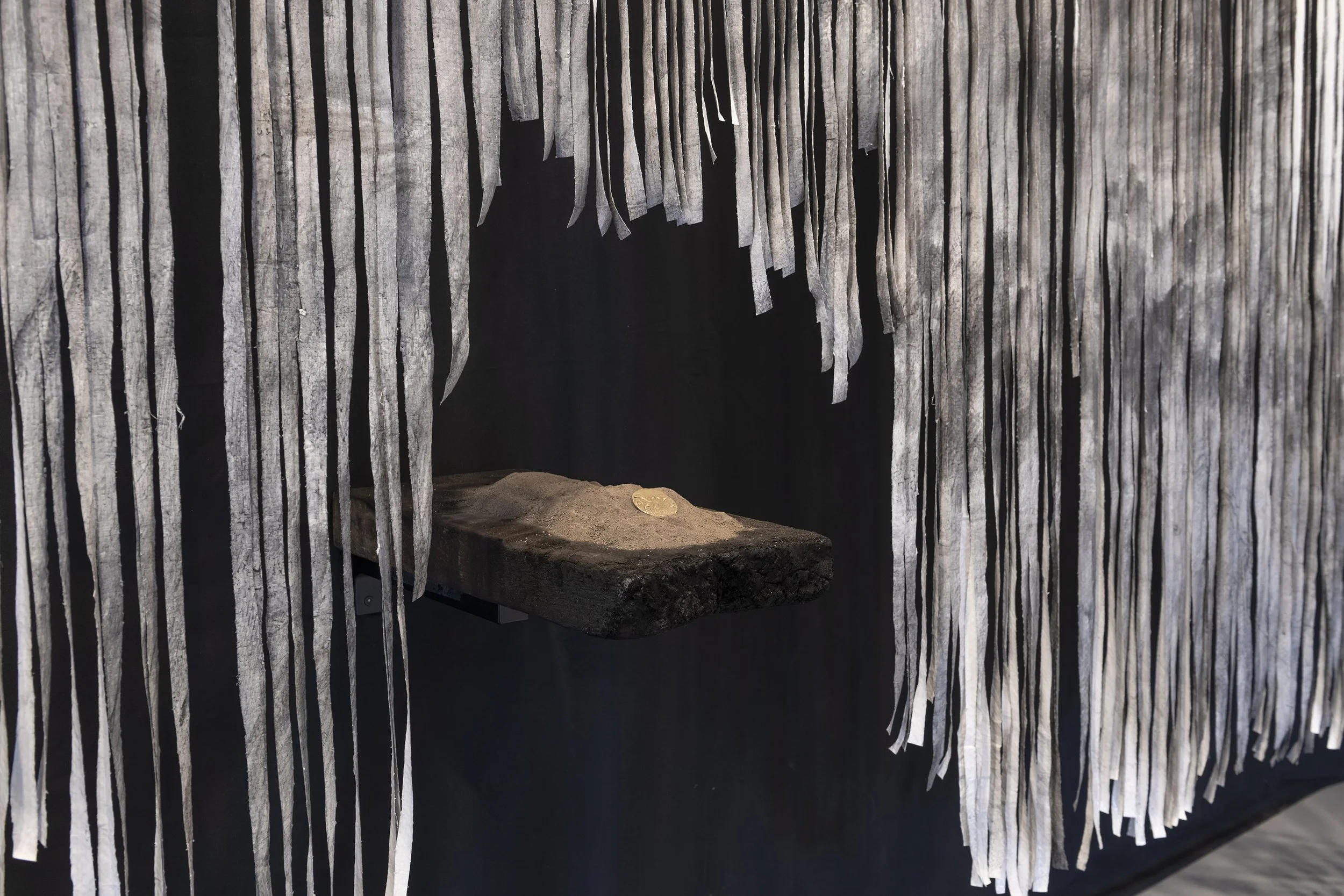
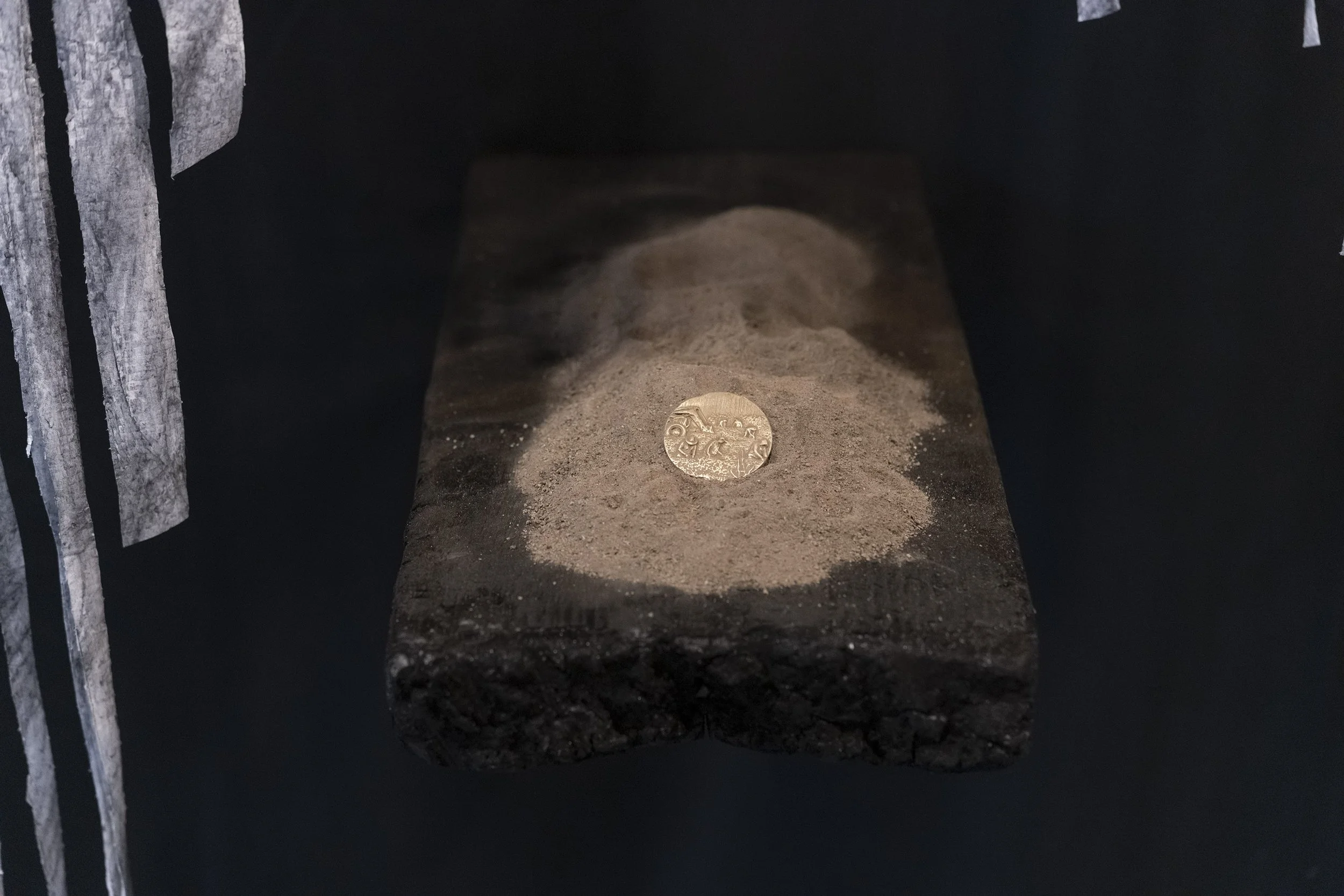
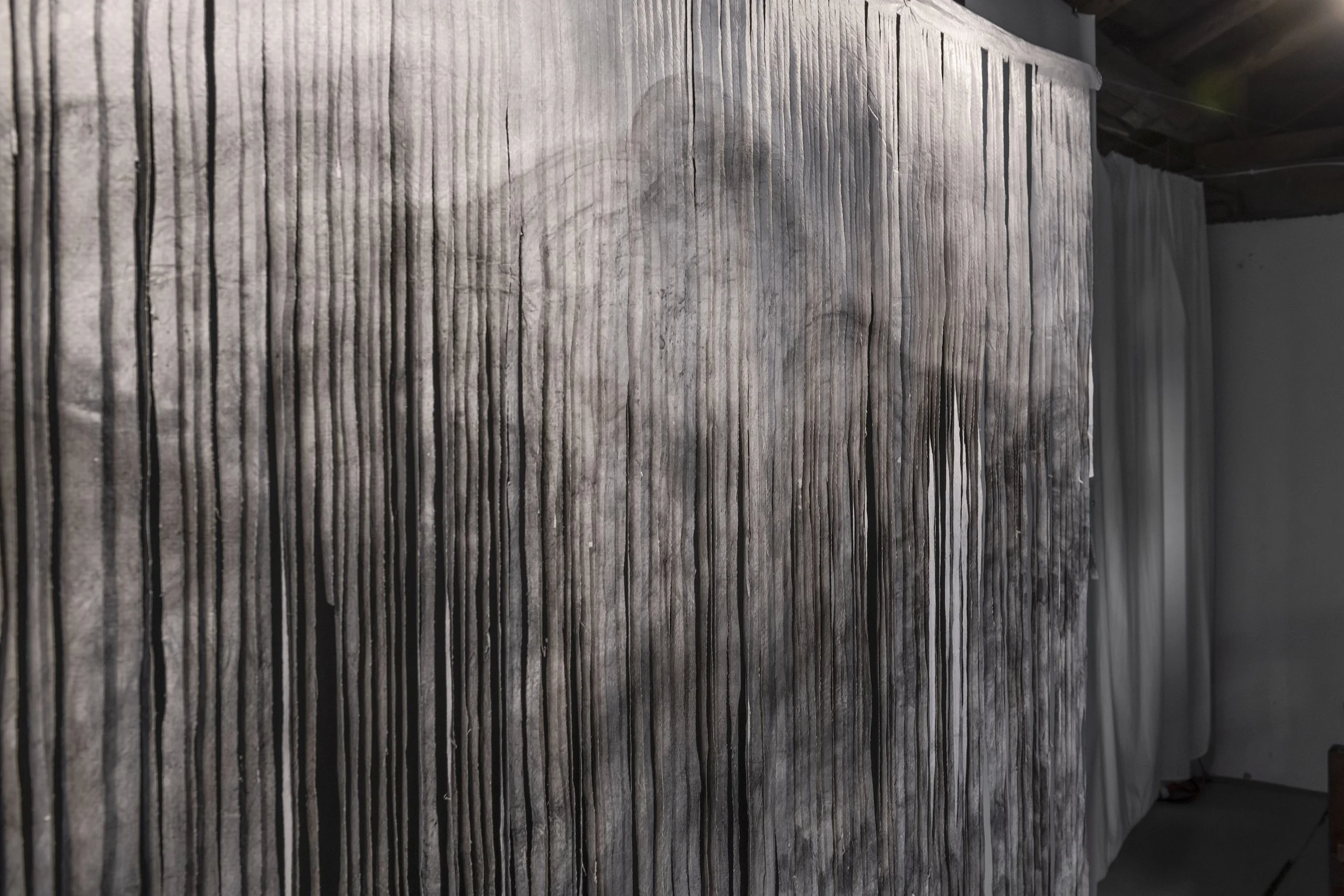
The power of artists lies in gathering these scattered fragments and weaving new narratives from almost imperceptible threads. Artists work with the materials and resources of the land, each becoming a bearer of a story: ash and coal evoke the use of slavery in the potash industry at the dawn of colonization; copper recalls the Abbott's Corner mine, which began operating during the Civil War; willow embodies the hope for a new life at the end of the Underground Railroad; earth, a hidden path or a furrow plowed in the soil; the North Star, a benevolent guide illuminating the way; water, the vital element connecting all territories. In this exhibition, the artists' works engage in dialogue without seeking the uniformity of a narrative transmitted by a dominant majority.
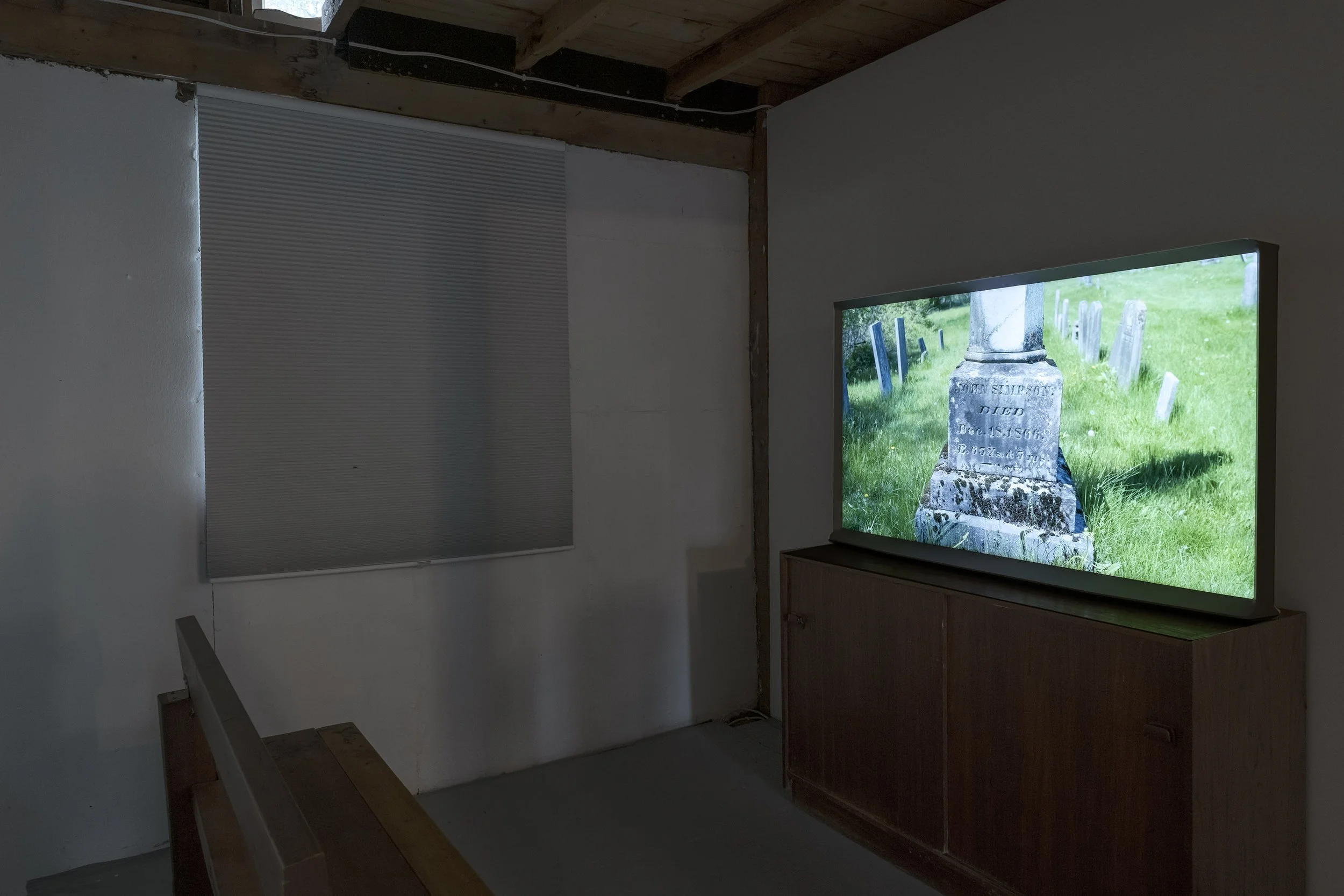
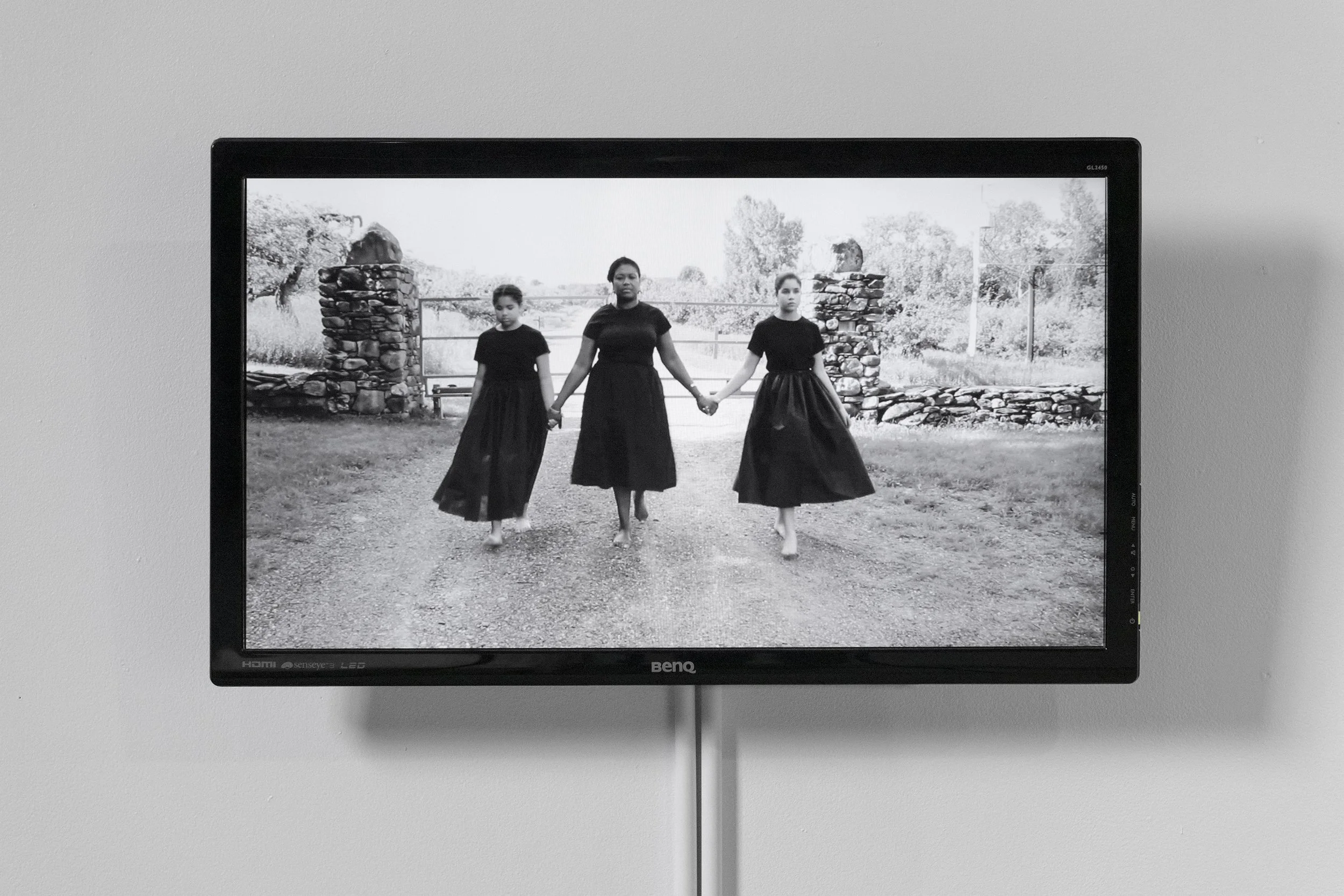
Andrew Jackson explores the links between memory, displacement, and the racialization of territories through a post-documentary approach that questions how contemporary landscapes make visible, erase, and bear the traces of colonial violence. His film navigates from Frelighsburg and Saint-Armand to Ghana, via Jamaica and the United Kingdom, illuminating local history and economy in light of the global issues with which they are inextricably linked.
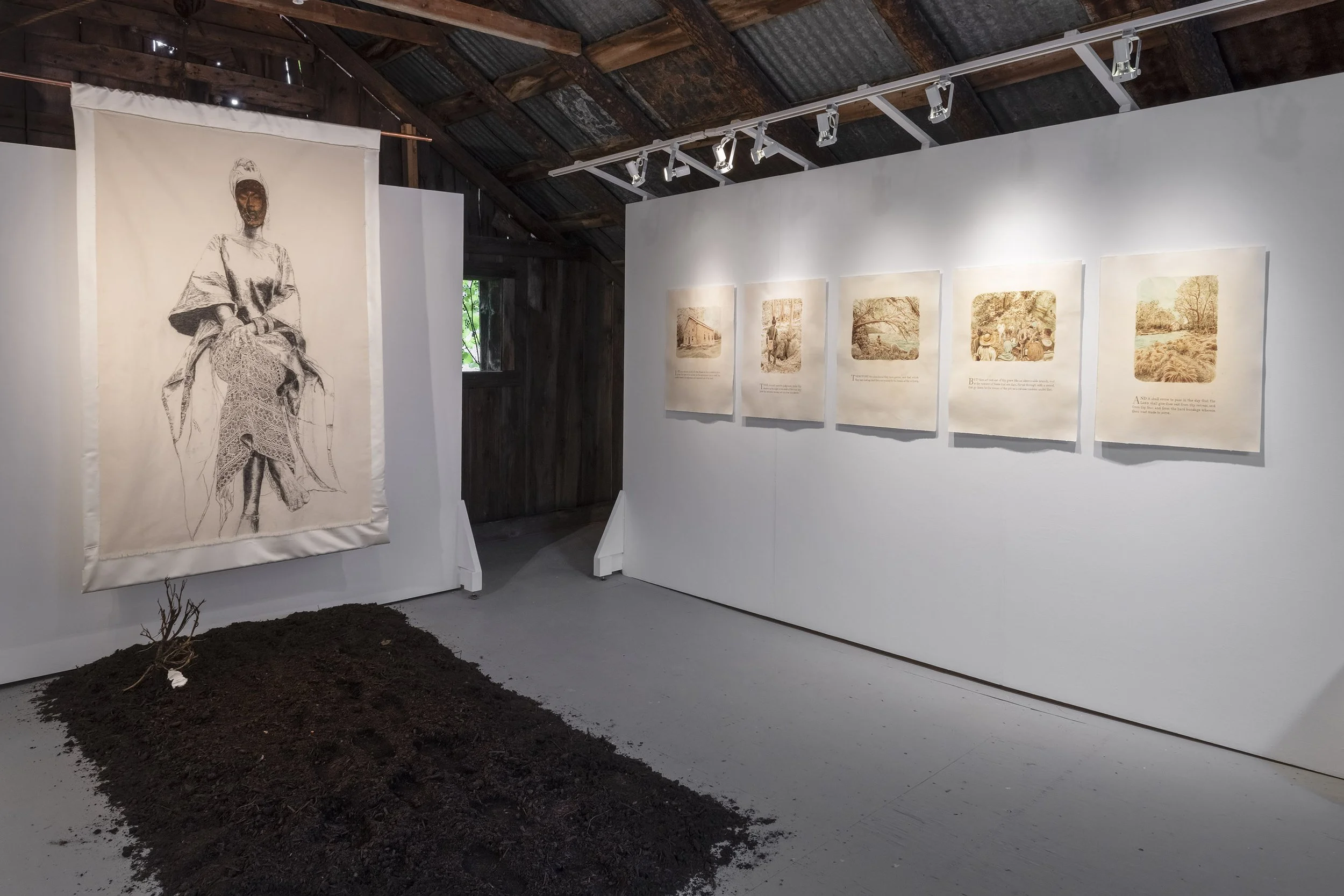
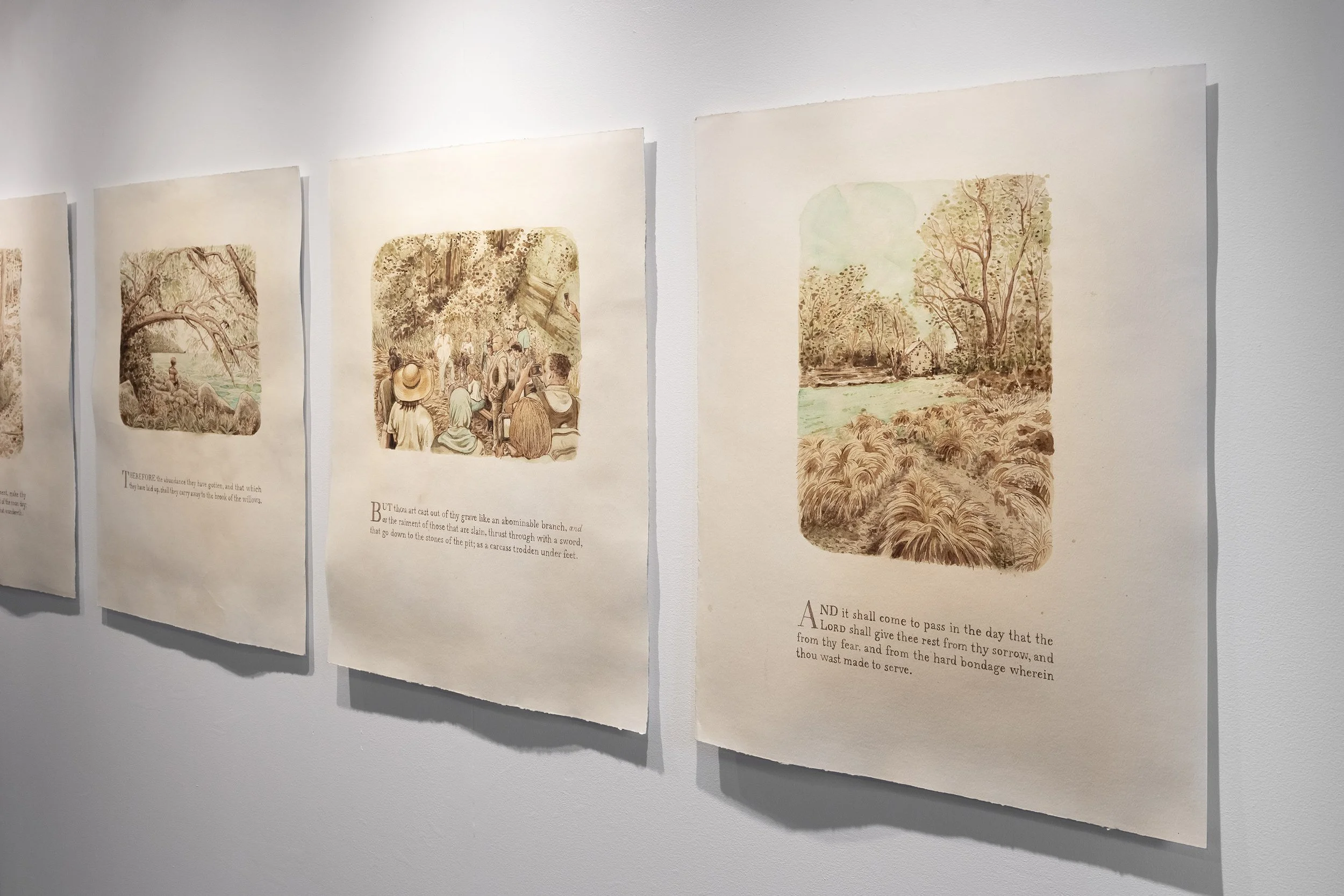
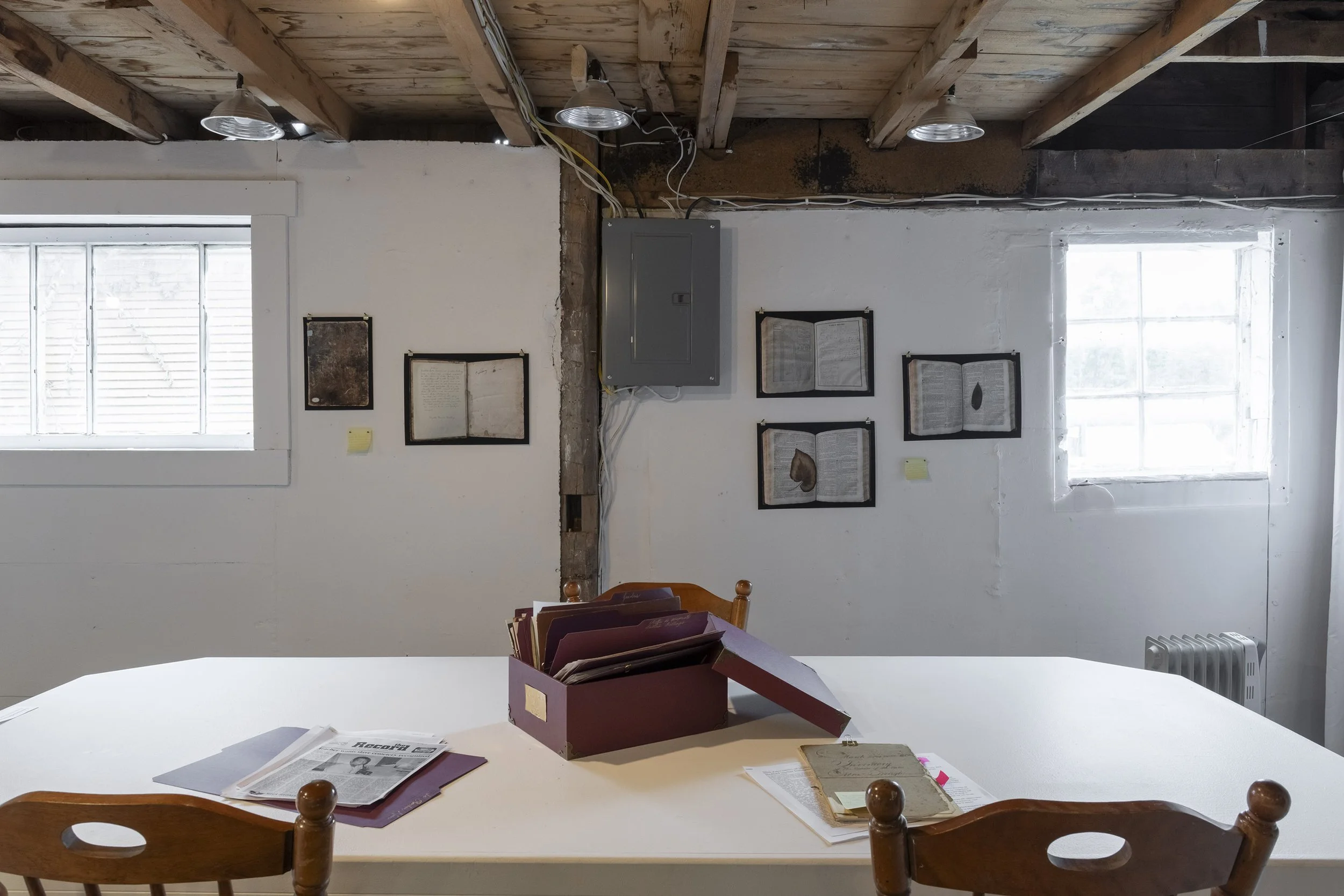
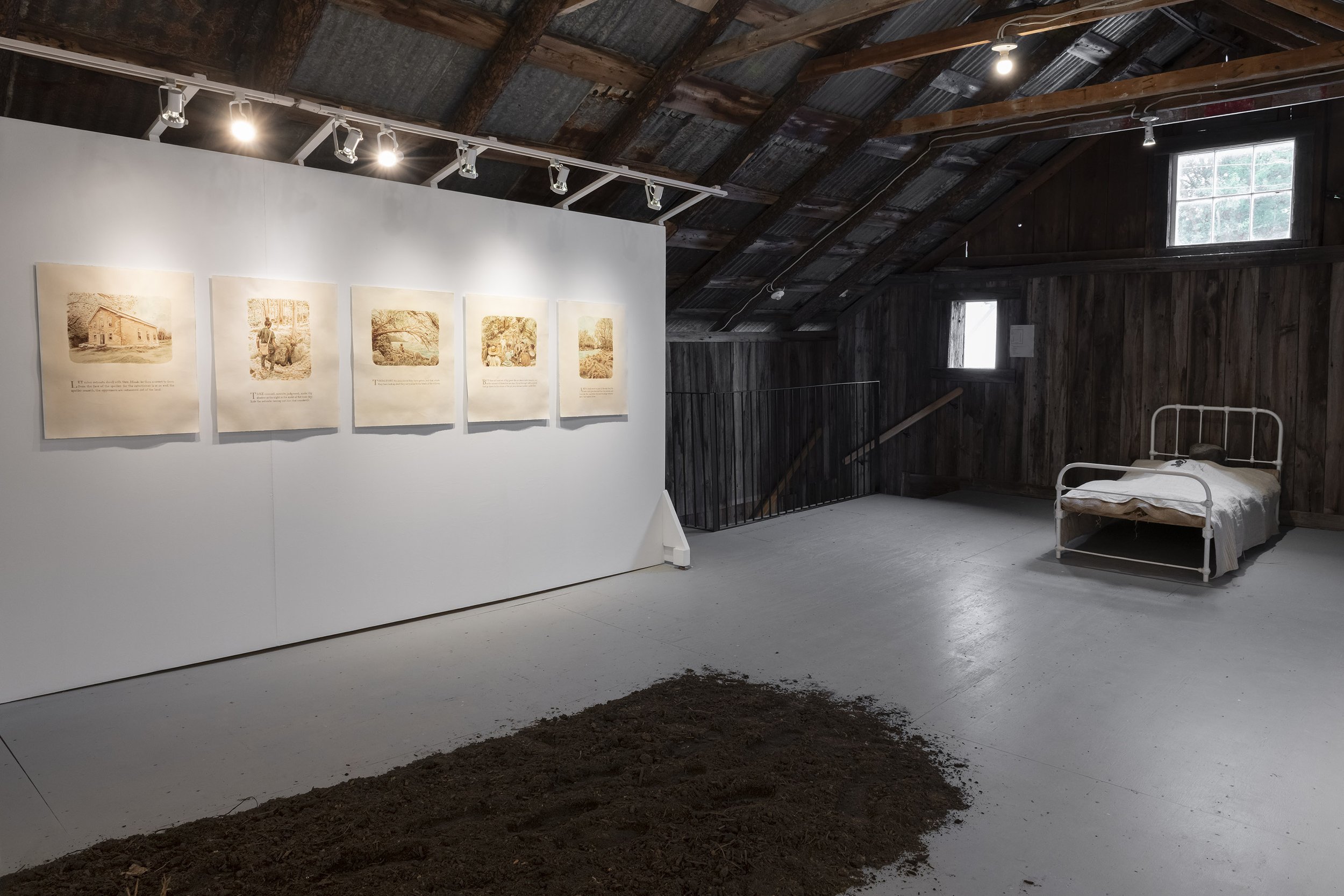
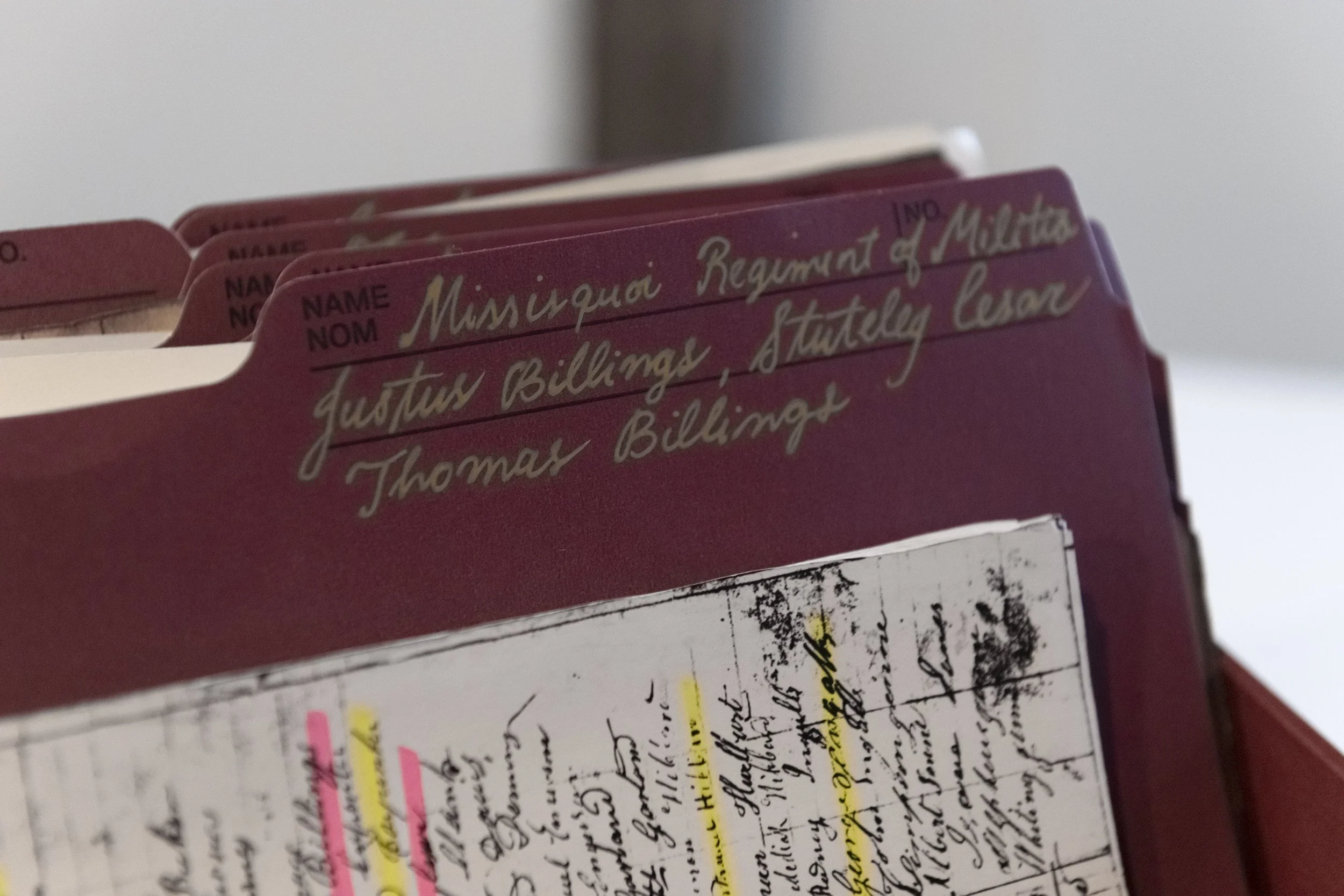
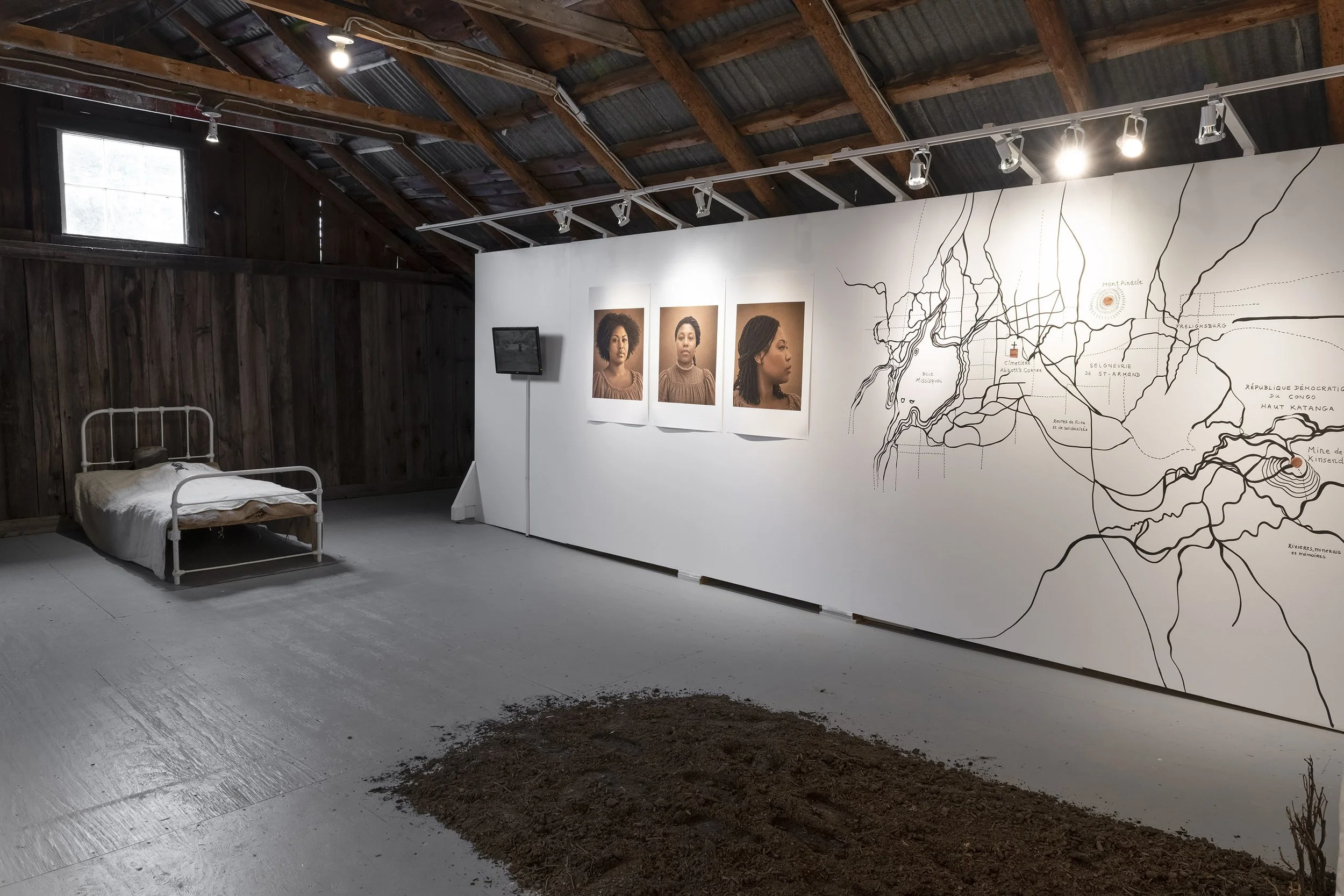
Emmanuelle Jacques ' drawings link emblematic sites of the Black presence in the region with verses from a Bible that belonged to Justus Billings, a Black man who left several traces in the local archives. Pressed between two pages of the Bible, a willow leaf marks these passages, surprisingly connected to the abolitionist struggles. The artist thus situates fragmented narratives within a sensitive cartography of a landscape haunted by ghostly presences.
Michèle Magema proposes a journey between the Québec and the Congo Basin, through the copper mining territories, to open up a reflection on the circulation of materials and the survival of women's bodies, making the landscape a space of transatlantic resonances. It thus honors the memory of Mary Billings and her daughter Eliza, who are buried in Abbott's Corner Cemetery, and that of Flavia, a farm worker whose labor is documented in a shop register.
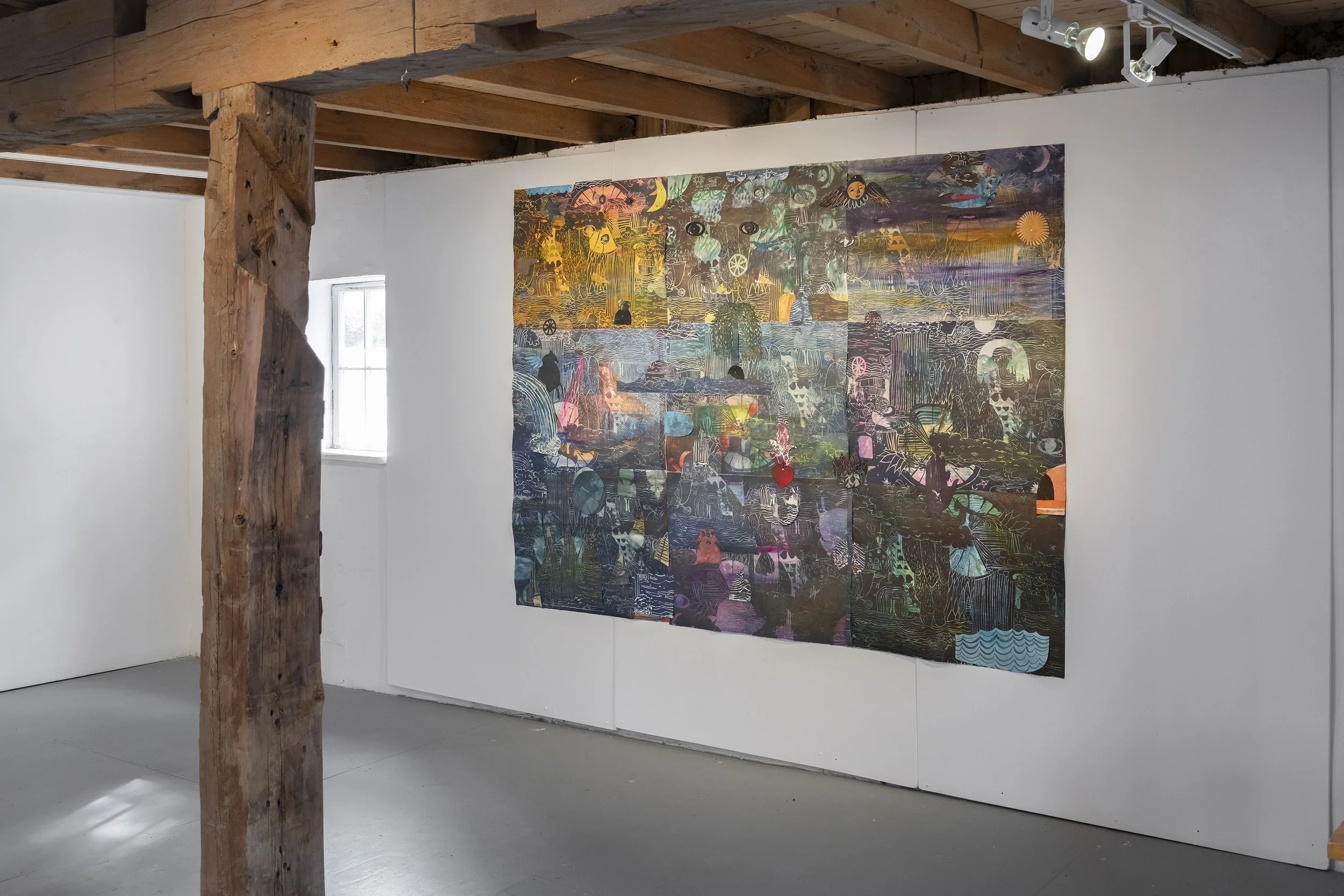
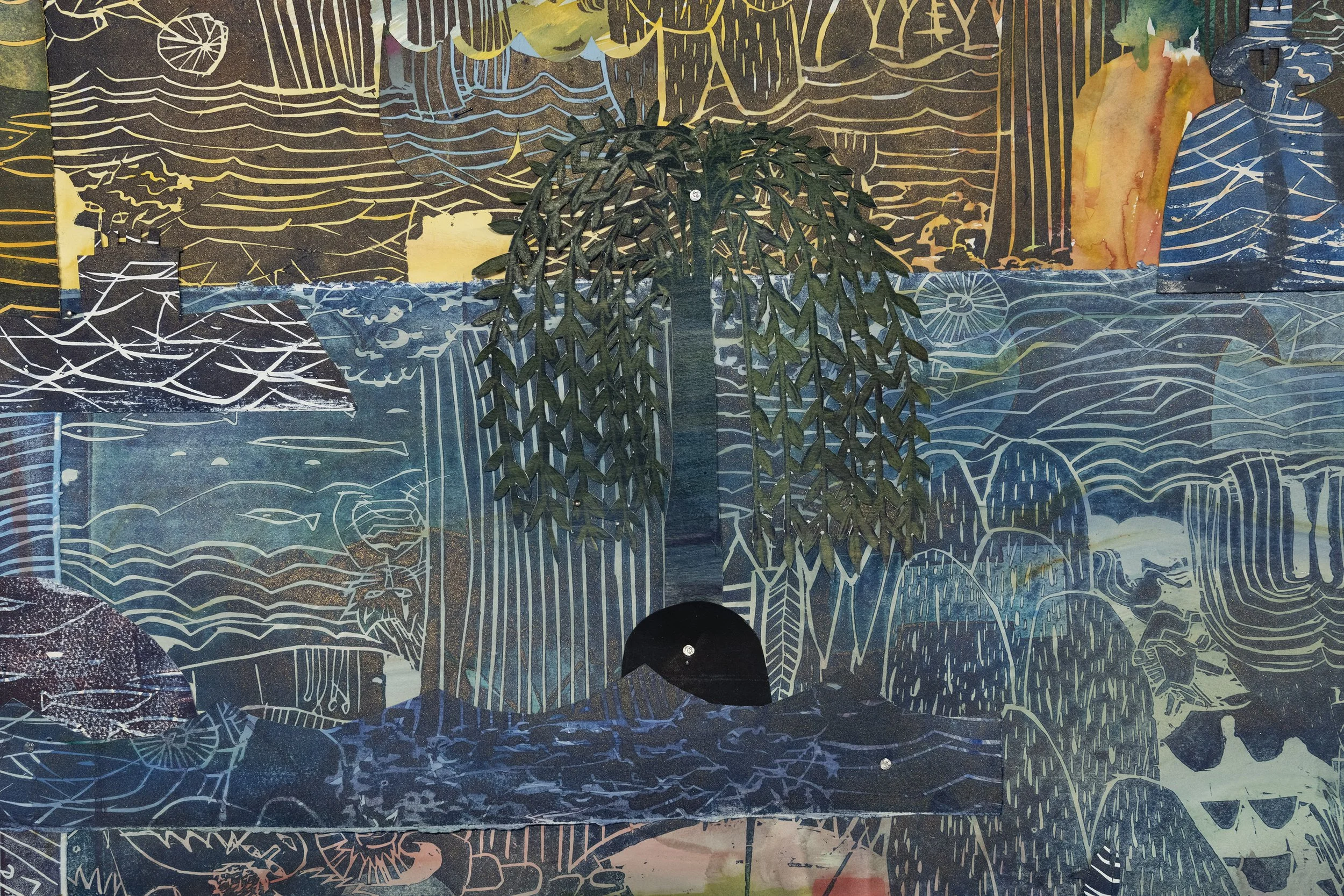
Through collage and engraving, Anna Jane McIntyre assembles fragments of oral history, myths, symbols, and historical elements into a richly imaginative fresco nestled within a rolling landscape reminiscent of Bosch’s Garden of Earthly Delights . In this unfolding aerial view, like the maps of an atlas, in all directions, the artist situates a tale where, through a rich and complex negotiation, she cultivates a sense of belonging to a territory that is sometimes as frightening as it is alluring (hooks, 2023).
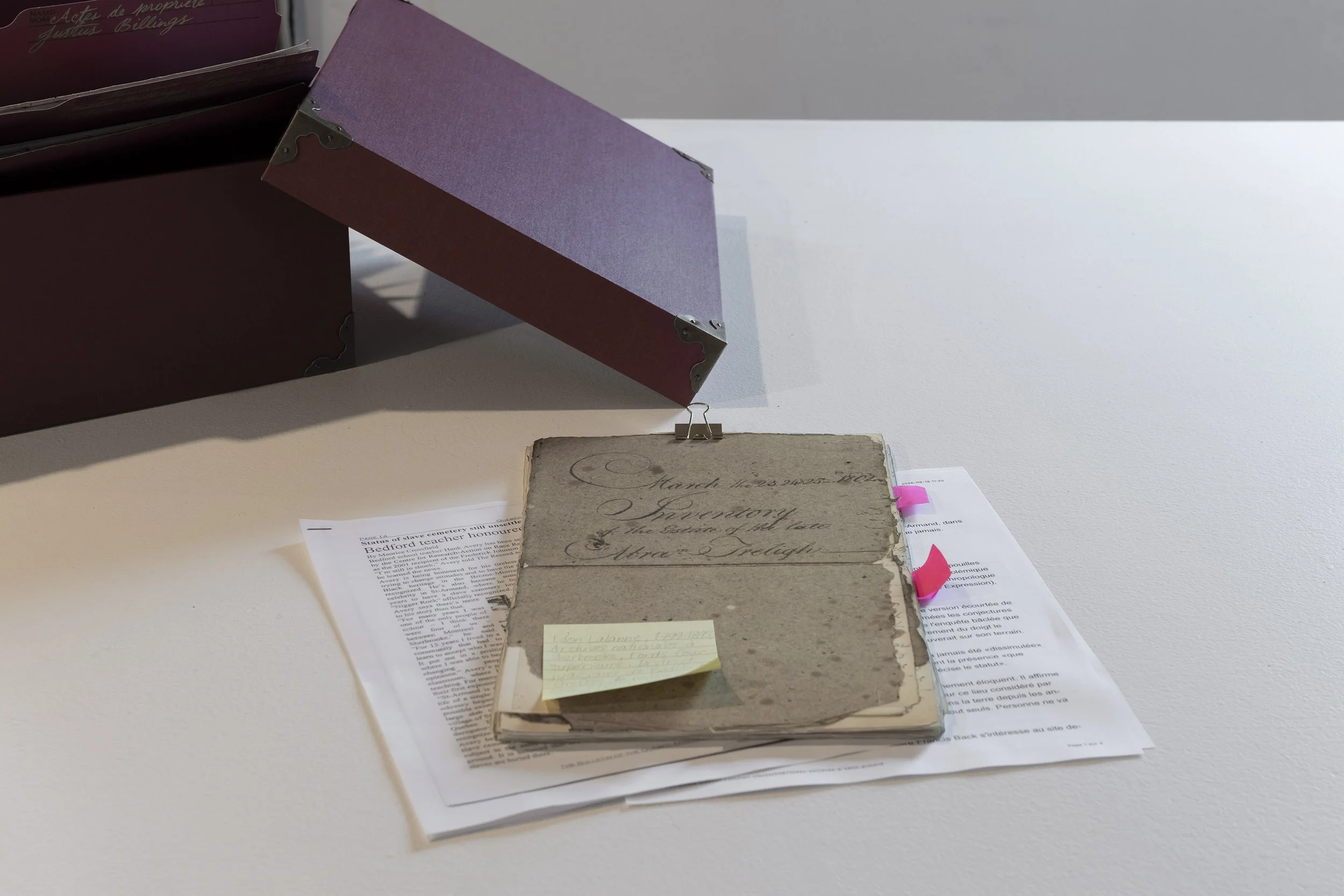
Jean-Marc Superville Sovak revisits landscapes inherited from colonization to unveil the vestiges of slavery that persist beneath the surface of official narratives, historical sites, and public spaces. His work pays homage to Jacobus, a Black boy purchased by Abraham Freligh in Rhinebeck, New York, and later mentioned, at the age of 11, amidst oxen and bushels of grain, in the inventory of the village pioneer's estate after his death. Thus, a heroic figure is shaken.
Aïda Vosoughi shows how borders themselves create landscapes. She view them as a force transforming territories, revealing how migratory movements and power relations continually produce new landscapes. His installation evokes the exploited labor involved in converting local forests into agricultural land, hinting at the violence hidden behind the richness and beauty of the landscapes.
Stanley Wany draws on mythologies, African culture, and colonial archives to reconstruct an Afro-descendant memory where drawing becomes a space for historical reappropriation. The case of Rocher Noir in St-Armand, which served as a burial site for enslaved Black people at the dawn of the 19th century, strongly permeates his work, in which he explores the traces that remain in the collective unconscious and the contemporary landscape.
Taking as their starting point the fragmentary archives of the Black presence in Brome-Missisquoi, the artists gathered here do not seek to explore the conditions of possibility for memory when documents are incomplete, when images are lacking, and when the landscapes themselves become the last repositories of erased lives. Their works invite us to recognize that the artist's strength lies in acting within their place and thinking with the world (Glissant, 2005); and that landscapes are composed as much of presences as of absences, as much of transmitted narratives as of interrupted histories, traversed by memories that continue to transform our understanding of the present.





Partners
This project was funded in whole or in part by the Great Lakes Fishery Commission (GLFC) under an assistance agreement with the NEIWPCC in partnership with the Lake Champlain Basin Program.

